Make Some Noise! Crafting Musical Instruments from Recycled Materials
- Jul 11, 2025
- 5 min read
Who says you need fancy equipment to make music? With a bit of creativity and some everyday items you've got lying around, the whole family can create an ensemble of homemade instruments! This guide will show you how to turn cardboard tubes, tissue boxes, and even tin cans into fun instruments. Let's get crafting!
Please ensure that children are under adult supervision whilst making these instruments.
Rice Rainstick
Create the soothing sound of rain with this simple rainstick.
What you'll need:
Cardboard tube (e.g. from a paper towel roll)
Uncooked rice
Pipe cleaners
Greaseproof paper
Elastic band
Optional: Paint

Let's make it:
If you want to decorate your rainstick, paint the cardboard tube and let it dry completely.
Take a piece of greaseproof paper and secure it over one end of the cardboard tube using an elastic band. Make sure it's secured tightly!
Fill your tube with uncooked rice and a few twisted pipe cleaners. The pipe cleaners will help the rice trickle slowly, creating that rain sound.
Once filled, secure the open end of the tube with another piece of greaseproof paper and an elastic band.
Now, gently tilt your rainstick back and forth to hear the "rain"!

Comb Kazoo
This classic homemade instrument is surprisingly fun and easy to make!
What you'll need:
Comb
Square piece of greaseproof paper (or tissue paper)
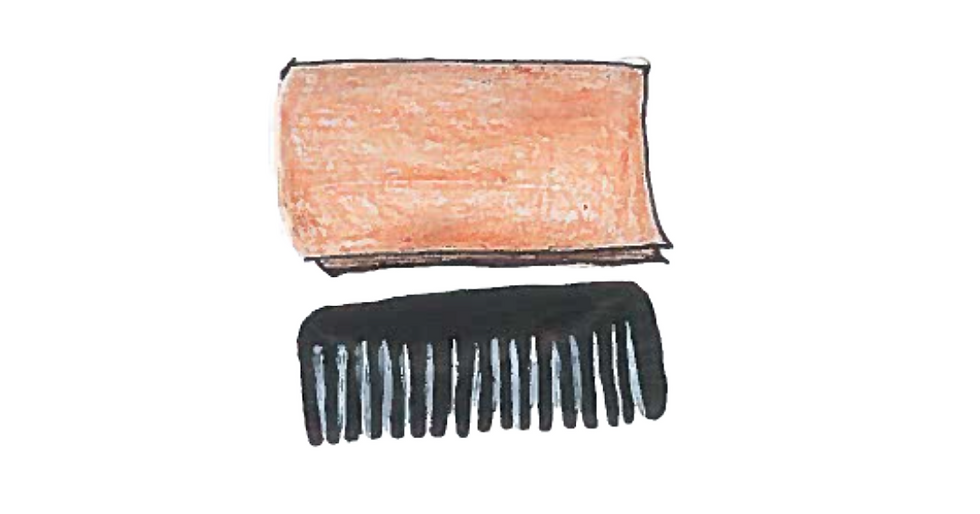
Let's make it:
Take your square piece of greaseproof paper and fold it in half.
Carefully place the comb inside the folded paper, ensuring the paper covers the teeth of the comb.
If the paper is much wider than the comb, you can trim off the excess at the sides.
To play, hold the edges of the paper, place the folded edge of the paper against your lips, and hum! The vibrations will create a buzzing sound.

Elastic Band Guitar
Strum your way to a catchy tune with this awesome cardboard guitar!
What you'll need:
Tissue box (or small cereal box with an oval hole cut in the front)
Long cardboard tube (from foil or kitchen roll)
2 lolly sticks
Elastic bands of different sizes and thicknesses
Optional: Poster or acrylic paint, coloured paper, buttons or decorations

Let's make it:
Prepare your box: If using a tissue box, remove any plastic. If you're painting the inside of the box, open it out flat, paint, and let it dry. You can also cut a piece of coloured paper and stick it to the base of the box to become the "inside" of your guitar. Once dry, glue the box back together with the painted side out.
Place one end of your long cardboard tube against an end of your tissue box and draw around it. Carefully cut out this hole.
Insert the cardboard tube into the hole you just cut at the top of the box. Secure it in place with sticky tape – this is your guitar's neck!
Glue the two lolly sticks in place at either end of the main hole on the front of the box. These will act as your "bridge". Let them dry completely.
Once everything is dry, stretch the elastic bands around the whole box, going over the lolly sticks. Experiment with different sized and thickness bands for different sounds!
Decorate! Now's the time to get creative with buttons, sequins, ribbon, or whatever you have to make your guitar unique.
Try plucking the bands and see what songs you can play!

Straw Panpipes
Create a classic wind instrument with a few simple straws.
What you'll need:
Paper straws (as many as needed to match the length of your lolly stick)
Lolly stick
Ribbon or washi tape, to decorate
Pencil
Scissors
Glue

Let's make it:
Lay your straws flat on a table. Decide on the lengths you want them to be – the bigger the steps between the straws, the bigger the difference in pitch your panpipes will make.
Mark your chosen lengths with a pencil, then cut the straws accordingly.
Lay the cut straws out next to each other, making sure their top edges are lined up.
Apply glue to the back of your lolly stick and carefully place it on top of the straws, ensuring it touches every straw. This will hold them together. Let it dry completely.
Finish by covering the lolly stick with ribbon or washi tape for a decorative touch.
To play, simply blow across the top of the straws, experimenting with different lengths to create various notes!

Lolly Stick Harmonica
A surprisingly effective little harmonica made from craft sticks.
What you'll need:
2 lolly sticks
Greaseproof paper
Non-toxic paint (optional)
Wooden matchsticks or toothpicks (cut to about 2cm long)
2 elastic bands

Let's make it:
If desired, paint both sides of your lolly sticks and allow them to dry.
Cut a piece of greaseproof paper that is the same width and length as your lolly sticks. Place this paper between the two lolly sticks.
Take one of your small matchstick or toothpick pieces. Place it vertically between the lolly sticks and the greaseproof paper at one end.
Wrap an elastic band around the lolly sticks, making sure it goes on either side of the matchstick to hold it securely in place.
Repeat step 3 and 4 at the other end of the lolly sticks with another matchstick piece and elastic band.
To play, blow through the small gap between the lolly sticks and listen to your harmonica's tune!

Maracas
Shake, rattle, and roll with these colourful homemade maracas!
What you'll need:
2 disposable wooden spoons
Fillable plastic eggs
Uncooked rice or dried lentils
PVA glue
Colourful washi tape or ribbon
Acrylic or poster paints (optional)
Let's make it:
If you want to add some colour, paint your wooden spoons and let them dry.
Place a couple of spoonfuls of uncooked rice or dried lentils into a fillable plastic egg and close it up.
Apply PVA glue to the flat side of each wooden spoon. Glue the spoons to either side of the plastic egg, lining them up so the handles meet at the end. Allow the glue to dry completely.
Once dry, stick a strip of colourful tape or ribbon over the join of the egg to secure it and add decoration.
Wrap some more tape or ribbon around the handles to hold them together firmly. If using glue for this step, allow it to dry.
Your maracas are now ready for some serious shaking!
Tin Can Drum
Beat to your own rhythm with a simple drum made from a tin can!
What you'll need:
A ring-pull tin can (be careful to check for sharp edges!) or a cardboard gravy container
A balloon or latex glove
Scissors
PVA glue
Ribbon or decorations of choice
2 paper straws
2 small pom-poms or bottle caps

Let's make it:
Prepare your drum: Carefully cut off the narrow neck of the balloon.
Stretch the remaining balloon over the top of the tin can. Pull the sides of the balloon (or glove) down so that the top surface is taut and the balloon has a firm grip on the sides of the tin. It should stay in place, but you can use an elastic band or tape to keep it extra secure if needed.
Now for the fun part: Glue on your ribbon or decorations to the tin can and let them dry.
Make your drumsticks: To create drumsticks, apply a dab of PVA glue to the end of a paper straw and attach a small pom-pom (or bottle cap). Repeat for the second drumstick and let them dry.
Once everything is dry, you're ready to bang out some awesome rhythms on your new drum!

There you have it! A collection of fun and easy musical instruments you can make at home. Which one will you try first? Share your creations with us!
You can find our core staff’s attempt at a homemade orchestra on our YouTube channel!
Thank you to our fabulous volunteer Lottie for the wonderful illustrations!